Understanding BS 7671 (18th Edition) Consumer Units & EICR Codes
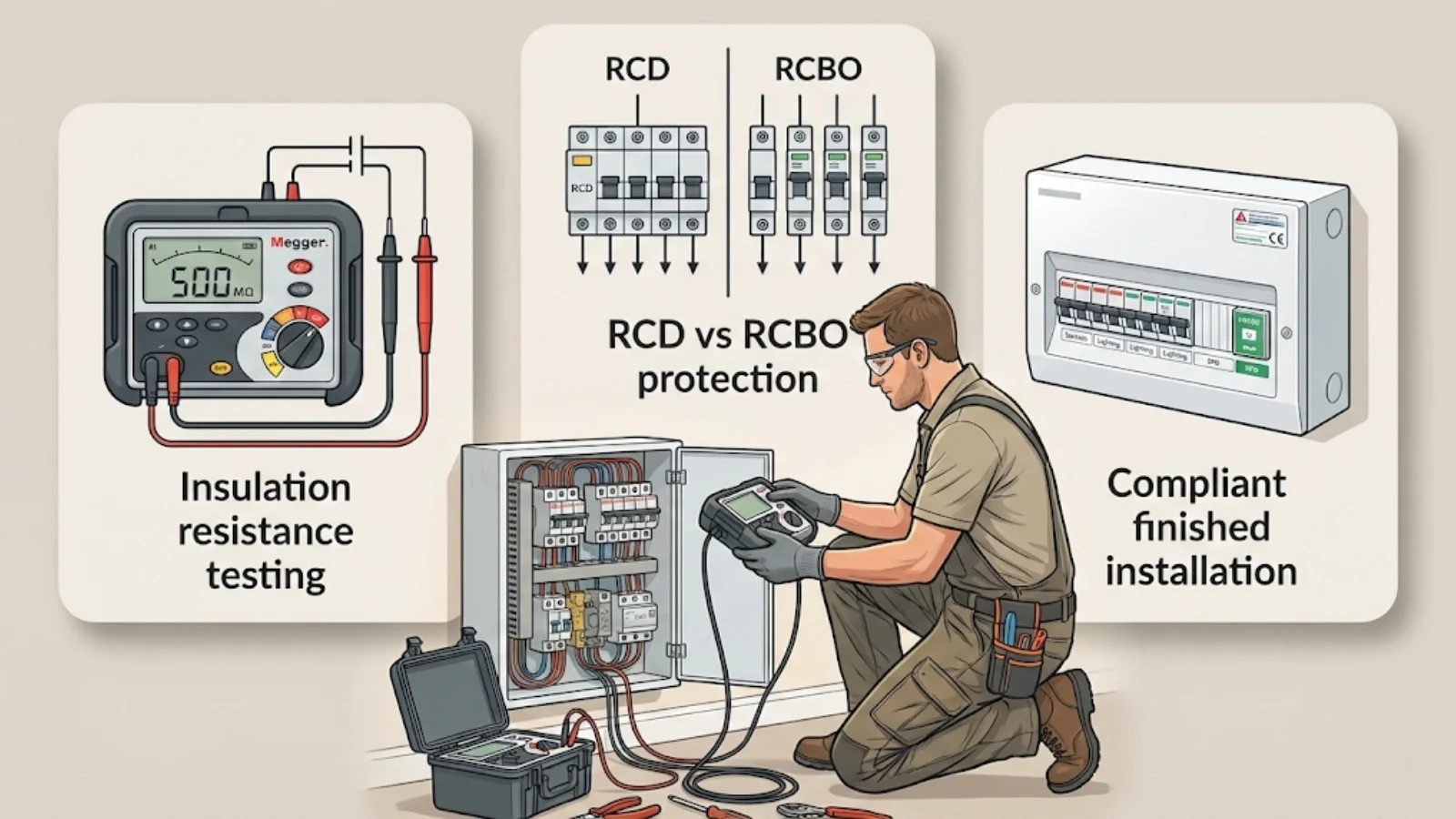
Whether you are buying an older British property, preparing a rental home for a 5-year statutory inspection, or adding high-load appliances like an induction hob, heat pump, or EV charger, your home’s consumer unit (fuseboard) is the heart of electrical safety. Under current BS 7671 (18th Edition Wiring Regulations), plastic fuseboards have been superseded by non-combustible metal-clad enclosures fitted with individual Type A RCBOs (Residual Current Breakers with Overcurrent) and mandatory Surge Protection Devices (SPDs).
When a registered electrician performs an Electrical Installation Condition Report (EICR), any observations are graded using four official classification codes:
- C1 (Danger Present): Immediate risk of electric shock or fire (e.g., exposed live conductors). Must be made safe before the electrician leaves site.
- C2 (Potentially Dangerous): Urgent remedial action required (e.g., absence of RCD protection on socket circuits or missing main protective bonding to gas/water pipes). Causes an automatic Unsatisfactory EICR result.
- FI (Further Investigation Required): Hidden fault or unexplained low insulation resistance reading that must be traced immediately. Also triggers an Unsatisfactory report.
- C3 (Improvement Recommended): Does not meet the latest edition of BS 7671 (such as an older plastic enclosure in good condition), but is not immediately unsafe—still passes as Satisfactory.
2026 UK Electrician Rates, EICR & Rewire Cost Guide
Verified Market Rates| Job / Service Scope | Typical UK Cost Range | Est. Timeframe | Action |
|---|---|---|---|
| Domestic EICR Safety Certificate (1–3 Bed Flat or House) | £150 – £260 | 2 – 4 Hours | |
| 18th Edition Metal Consumer Unit Upgrade (Full RCBO + SPD + EIC) | £620 – £980 | 1 Day | |
| Main Equipotential Earth Bonding Upgrade (Gas & Water Stopcock) | £160 – £290 | 2 – 3 Hours | |
| Full House Rewire: 2-Bed Terrace / Flat (First & Second Fix) | £3,400 – £4,800 | 4 – 6 Days | |
| Full House Rewire: 3-Bed Semi-Detached (Inc. Consumer Unit & Cert) | £4,500 – £6,500 | 5 – 8 Days | |
| Full House Rewire: 4-Bed Detached House (Inc. Data/LED Downlights) | £6,500 – £9,500 | 7 – 12 Days |



UK Electrical Safety & Part P FAQs
What electrical work is notifiable under Part P Building Regulations?
How often do UK landlords and homeowners need an EICR?
Why choose an all-RCBO consumer unit over a dual-RCD board?
Book a Certified Electrician for an EICR, Fuseboard or Rewire
Get fast, transparent quotes from Part P registered local electricians.